

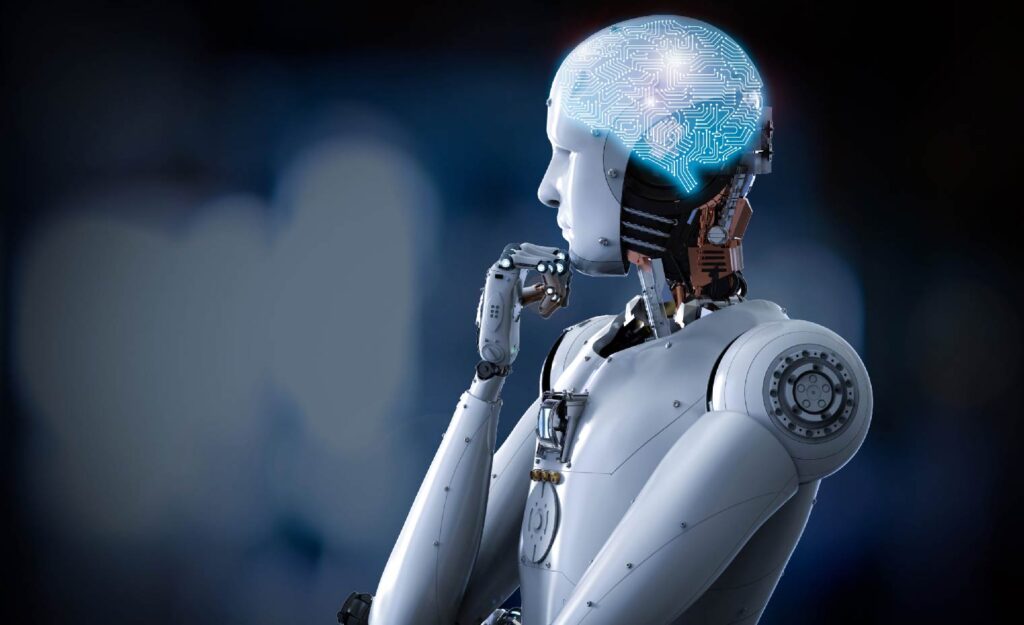
Technology vitro fertilization (IVF) using automated robot WHO brings hope to the rare late thanks to the ability of screening, accurate measurement.
January 6, Alin Quintana, 34, walked into Hope IVF clinic, in vitro fertilization (IVF) in Mexico City, with psychological, this will be the last time after 8 years of failure to 96 cycles of hope and then despair. But different from before, this time, the robot WHO will help her create the baby.
Since IVF appeared in the late 1970s, more than 13 million babies had been born thanks to this technology. However, the process depends much on the manipulation of medical professionals, from the follicular elves, select the best sperm are swimming in a petri dish with a microscope high power to-use tools like needles, super small and adjust the correct force to push the sperm into the middle of eggs smaller than a grain of rice many times. The whole process is very sophisticated and difficult to implement, making the success rate of IVF is only about 50%, even in the best conditions.
Now, robots and artificial intelligence are changing that. In the last three years, at least 20 babies were born through the clinical trials related to automation with little or no intervention of human. Software computer vision similar to the kind used for self-driving cars can immediately pick out the “candidate of the strongest” in the hundreds of thousands of sperm, only a fraction of the hair fiber. This ability far beyond any eye to any of the embryology is training. The robot arm may collect sperm is selected, mix the chemicals needed for healthy egg, then lightly fertilize the egg, the beginning of the conception.
System robot AI Aura of startup Conceivable Life Science. Video: YouTube/Conceivable Life Science
One of the efforts to automate most ambitious not take place in the technology center of Silicon valley, which in Mexico City. Here, the pair of rare late – majority't afford IVF – is the procedure for free if you agree to join the test automation system Aura.
Aura automation 205 step in IVF, from frozen eggs to create embryos, due to startup Conceivable Life Science development. Though headquartered in New York, Conceivable is the brainchild of doctor who Mexico Alejandro Chávez-Badiola, one of the first doctors to find how the application WHO to treat rare late.
The goal of the Chávez-Badiola is re-create the “golden hands” of the expert embryology best by robots, tech help, this no longer depends on the workmanship of the individual. The investment is also of interest because the automated system, combined robotic hardware and software, algorithms never tire. We see things which the human eye can not. In theory, they can do the job, or at least part of the job, quickly and accurately than humans. This helps to improve results, reduce costs and serve more patients.
The story of doctor Chávez-Badiola starting from 2016, when a husband and wife to the clinic to cure infertility. Chávez-Badiola believe that the method of IVF will be effective because they are young and healthy, there is no biological marker of infertility.
But patients who have undergone two times, but still can't conceive. Chávez-Badiola requires the analyst strict process video every embryo that the group intends to transfer and count the cells in each embryo, although this is not common in IVF when it.
A week later, laboratory director said impossible task because of the loss of too much time manipulation craft. Chávez-Badiola get out: “The problem here is math”. He partnered with the experts of mathematics and computer vision to develop AI algorithms can count, to perform measurements of micro and assess the quality of the workpiece.
The initial research of the group Chávez-Badiola, to works first published in 2020, pointing out the filter, computer vision can do better than doctor 11,6% in predicting embryo how healthy genetically.
After that, the team move on to the sperm, which is particularly difficult to track because always on the move and collide with each other. WHO help detect a moving vortex type fast, but not previously known, is a sign of healthy sperm. Research shows that computers can surpass the embryology when selecting the best sperm increase of 12% of the embryos eligible for transplant.

Chávez-Badiola connect with businessman Alan Murray and Joshua Abram in New York and the founder of Conceivable 2022. After fabrication robotic system, complete various tests on mice for three generations healthy, they started testing on the year 2023.
The original research has not proven to be robots WHO excels completely than humans in IVF. But according to David Sable, obstetrician-cum-mentor of the Conceivable, the system do a good equivalent to a clinic, the average has also been promising results for treating many cases more than, reduce fatigue of medical staff and can reduce costs over time. Sable estimate, if IVF enough to meet global demand, will have to add at least 20 million babies born each year instead of just one million today.
Months ago, Conceivable successfully raised $ 50 million in a round of fund raising Series A. “this funding confirms our vision about the change of IVF with automation technology thanks to robot ONE,” Murray said. “Our platform to solve the challenges that core clinics rare late're facing – the success rate unpredictable, processing power, limited service and are difficult to access. New investment allows us to accelerate the process of bringing this disruptive technology to the market”.
In Mexico, IVF is still quite far exceed the financial capabilities and many people protested. “Our church say that the conception must take place naturally,” Noemi Pichardo, 34, is pregnant 22 weeks thanks to the Aura system, said.
When a nurse at the clinic recommended for wife, husband Pichardo on system robot AI, they did not tell the family. “It's hard to explain to people that in a way, AI can do things that humans can't,” she said.
There are 125 women involved in the trial robot system in Mexico, is considered to be the pioneers of new technology. With Alin Quintana and her husband, involved the study of Conceivable thing is incredibly lucky. Now, in pregnancy week 17, she said, will tell the story about the process of pregnancy through automation: “I would say I was one of the first baby. We have to be very difficult to find the child. You're the baby is expecting the best”.
Source: vnexpress